Pages

Wednesday, May 05, 2010

On Stephen Hawking's concern about aliens


In the vastness of the Cosmos, we are just a "pale blue dot" as Carl Sagan said. With over 400,000,000,000 (400 Billion) stars in the Milky Way Galaxy Alone and about 6 billion people on planet Earth, that translates to 66.66 stars in this Galaxy for every human being on this planet. Now multiply that by the 100s of billions of 'known' galaxies and you get a huge, huge number. That coupled with the fact that since 1995, we have found hundreds of extrasolar planets, it is almost certain that we cannot be alone in this universe. But despite all the vastness of the Cosmos, one fact remains - Earth is still our only home. We have nowhere else to go yet. So the opinion of Dr. Stephen Hawking about whether we should be careful about inviting alien species here for fear of them being hostile to us is a very wise opinion. The Earth is just too precious.
But there are other aspects to this whole debate. Take the example of Christopher Columbus travelling across the Atlantic and finding the Native Americans. Their communication technology of that time was limited to perhaps 'smoke signals'. So, its not that Columbus knew that they were there when he came. He would have come anyways. Likewise, the aliens would not necessarily even be able to detect our radio and TV signals. Who knows what kind of technology they use. Maybe our technology is actually too primitive to be detected.
Take the case of ants, dolphins and whales on our world. They obviously are able to communicate with each other. Ants are able to make complex colonies. Yet we humans don't even know what they say to each other. We don't treat them like fellow intelligent beings. Why would an alien even bother about us? How would they communicate with us if they are much higher on the evolutionary scale. It is like us trying to communicate with ants. Perhaps they are so far ahead of us that they are already here and we are not able to observe them, much like amoebae do not have any idea when we watch them under a microscope. There are so many possibilities.
But the one thing that we need to do is keep on looking for life. Even if we are never able to have a meaningful conversation with an alien either too ahead or too behind our scale on the evolutionary ladder, we must keep looking for those who are more or less at the same level.
Perhaps we will only learn the secret of interstellar travel when we have been able to survive without killing each other. Maybe we will come into contact only when we evolve into a higher state of consciousness as a species. Maybe we are still in the stage of a cocoon and must evolve more before we are able to venture out into the Cosmos. Maybe. Maybe. Maybe. Perhaps. Perhaps. Perhaps. One day we will find the answers.
But unfortunately we are still earthbound and this is something we need to take very seriously. We have all kinds of issues here on terra firma - terrorism, environmental problems, poverty, etc. We need to tackle these first and then ultimately if we are to survive as a race - we must venture out into the stars - aliens or no aliens - the future of humanity is in space. If our civilisation is to survive in the long term, we have to colonise the Galaxy or at least to begin with our little measly corner in it.

Tuesday, April 27, 2010

Good cheap Mac software substitute for Photoshop and Dreamweaver users

After buying my MacBook Pro, one of the things that took some getting used to was the compatibility with certain popular software like Photoshop and Dreamweaver - applications that I used very frequently. Well, Adobe (the company that makes both the above mentioned software) has a Mac version as well. But of course, the issue here is the price. If you were to download and buy the new Adobe CS5 suite it would cost you more than $ 1000 US dollars!

So after discovering a site one day, I was pleased to find that it was made on a software called RapidWeaver, which is made exclusively for Macs. I went to the rapidweaver site - http://www.realmacsoftware.com/rapidweaver/ and downloaded it. After trying it out I am of the opinion that while it lacks much of the real control that Dreamweaver offers for making websites, it is pretty good for making a basic attractive website at a very attractive price - only $79 US.

Then comes the photoshop equivalent. Though I haven't downloaded and tried it as yet, but http://www.pixelmator.com/ seems to have most of the features that Photoshop gives at a very attractive price of $ 59 US. I believe they have a Windows version as well.

So worth a look for Mac users trying to get their hands on some Mac Software.

Monday, April 19, 2010

Shashi Tharoor clean bowled

When Shashi Tharoor entered Indian politics a year ago, not even the fake pundits predicted that he would be out so soon. Kind of like Tendulkar being clean bowled in his first over.

The nation looked forward to the entry of this person into it's political arena. Here was a man who was a 'super diplomat', a man who was a heartbeat away from becoming the UN Secretary General.

But despite his impeccable credentials and diplomatic record, Tharoor turned out to be a major disappointment. His never-ending tweets (many times with controversial contents) showed a surprising lack of tact and diplomacy. It was really unnecessary for him to have written all these official matters in a hasty and irreverent manner.

The last straw of course being the IPL controversy which led to his resignation.

Is Tharoor out of Indian politics for good? Who knows. But what is for sure is that he needs some serious coaching on how to conduct himself as a minister. A minister is a representative of the government and as such is not supposed to air out his opinions so openly (sad, but true). But Tharoor is still an MP and maybe he could still be a better MP than he was a minister. But if it is proved that there was some corruption involved in the IPL scandal, maybe even his future as an MP could be in doubt.

New blog colour scheme

Changed the colour scheme on my blog today. Hope you like it better than before.

Thursday, April 15, 2010

Blog lazy!

Okay, so I haven't been blogging much lately. Well, what can I say other than the fact that I have been lazy! Having said that, I hope to be more regular here on. The thing is now with all these social apps - twitter, facebook, etc. you never really know whether to tweet, blog or note (write a Facebook note that is - yeh, I think I've invented a new socio-tech word..come to think of it -- 'socio-tech' sounds pretty original as well, no?)

Got to go now, more later.


Saturday, March 13, 2010

Faith, Reticence And Work - Edit Page - Opinion - Home - The Times of India

Faith, Reticence and Work
Prashant Solomon
The Bible tells us that Jesus Christ performed many miracles, including healing the sick and even raising the dead. Christ tells healed people two things: ''According to your faith be it unto you'', and ''your faith hath made thee whole''. Then he charges them by saying, ''Tell no man about what has happened to you.'' Faith has a vital role to play here.

The Roman centurion whose servant was ill had so much faith in Christ that though Christ offered to come to his house the centurion said, ''I am not worthy that you come to my house, but simply say the word and it shall be done. Like I am a man in authority and when I tell my subordinates do this or do that, I know it shall be done.''

Jesus was so impressed by the centurion's faith that he declared to all those assembled there, ''I have never seen so much faith. No, not in Israel.'' Within the hour, the servant had miraculously been healed.

However, there are also some cases in the Bible where Jesus could not cure people ''because of their unbelief. Jesus also said to ''tell no man''. This is so because at times sharing things with others can be counterproductive as other people's envy, doubts, fears and negativity can adversely affect the healed person's mind and could also create some kind of negativity which could hinder the healing or other desire of the seeker as a negative suggestion is also powerful and can choke the flow of positive energy or belief. This is why reticence is important. Claude M Bristol says in his book, The Magic of Believing: "It cannot be too strongly emphasised that you should not give anyone an inkling of your plans or desires. To do so may end disastrously for you.'' Because the negative vibrations that other people can send you could be powerful and can deter your plans. This is perhaps the same reason that Jesus instructs the healed person to ''tell no man''.

When a woman touched the robe of Jesus, she was cured and Jesus asked: "Who touched me for I could feel virtue flowing out of me." Now the word 'virtue' is not the best translation of the original Greek word dynamis which means power or strength. Incidentally, all the verses that talk of Jesus's 'mighty works' also are translations of the same Greek word dynamis. Each time in the original Greek text, it was this word that was actually used. This word is used throughout the New Testament. So there is a kind of power that flows into the faithful, it is this faith that attracts the flow of the healing power and it is this 'power' itself that is the originator of the mighty works of Jesus Christ as described in the Bible. It is likewise lack of faith that blocks the flow of healing power.

The woman believed that Christ would cure her, but she also acted by touching his robe. The centurion had faith in Jesus, but acted by asking Jesus to heal him. There must be some kind of action or request (prayer) on the part of the receiver. ''Ask and it shall be given'', ''seek and you shall find''. While we need to have faith in God, we need to act as well for without action on our part, faith itself is of no use ''For as the body without the spirit is dead, so faith without works is dead also.''

Sunday, March 07, 2010

Chintels day out at Ambience Mall


On Saturday, March 6, 2010 - we at Chintels officially started off our 25th anniversary celebrations. We plan to have a series of celebrations that will culminate in a 'grand finale' sometime towards the end of this year.

To get the ball rolling, the entire staff of Chintels corporate office had a 'day out' at Ambience Mall in Gurgaon. The day started off at 10:00 am, when we all assembled outside the PVR ticket counter and watched the film 'Atithi, Tum kab jayoge'. As for the film, I would give it a 4 out of 10. Well, this is not supposed to be a film review, so we'll leave it at that.

After this, I bought a new Canon PowerShot SX200 IS from the Reliance electronics store to click some pictures of the event. This was followed by lunch at the food court, where after much deliberation, I decided to have a slice of pepperoni pizza from Sbarro. It was OK, nothing to write home about.

The next thing we did, which was really the highlight of the day as far as the rest of the Chintels people were concerned was the bowling at Blu-O. Wow! We had a blast to say the least! We booked about five lanes and played for about three hours non-stop. It was good fun. Photos of the event are also being posted here.

After that most of the team Chintels left, but I stayed on with my parents, wife, brother and a cousin who was there. We had some wheat beer at the Bavarian (part of Rockman's Beer Island) and then the highlight of the day for me and my brother was that we both bought identical 13" MacBook Pros!

But by the end of it, I was dog tired. My brother drove home and as soon as I reached home, I crashed out! But what a day man. I haven't had so much fun in a long time and I have never spent so much time in a mall on a single day. We were there for about 10 and a half hours!

Monday, February 15, 2010

Where are you in the Milky Way Galaxy?

Like a mote of dust our planet is in the vastness of the Milky Way Galaxy, which in turn is but a mote of dust compared to the vastness of the Cosmos. Yet we divide, bicker and kill. Make peace not war. There is so much more to learn and explore.

A little video I made


Saturday, February 06, 2010

Indians first, Indians last

Facebook Prashant Solomon: Indians first, Indians last:
"SRK, Sachin Tendulkar, Rahul Gandhi and the list must keep growing of those people who will stand up to the devisive hooliganism of the Thackerays. India is not a land of Marathis, Gujaratis, Punjabis, Tamilians, Delhiites, etc. It is the land of Indians! We are all members of one body, one family, one India and in a united voice we declare that We The People Of India will fight against the forces of communalism, regionalism, casteism and any other 'ism' that threatens to divide our people. It is time for us to be Indians first and Indians last. Whether Hindu, Christian, Muslim, Sikh, Buddhist or Jew we are Indians. Whether Marathi, Gujarati, Punjabi - we are Indians. Whether Dalit, Brahmin, Yadav or Jat - we are Indians and this is all we need to remember. Jai Hind!"

Monday, January 11, 2010

Tribute to my grandfathers

Prashant Solomon's tribute to his grandfathers
January 10, 2010

To all the members of our family that could not be with us today, I first want to say that you are all missed. We wish you could be here, but we understand that coming here on such short notice is difficult. For your benefit, we are going to upload the photos and videos of this event on the Internet soon. To those that could make it, I thank you.

In this month of January, in the year 1910 – (remember this was one hundred years ago before the First World War, before the Titanic sunk) – two men were born. They were named Ezekiel Henry Solomon on January 13 and Samuel Prem Dass, or "Sammy" as he was affectionately called, on January 31.

Ezekiel and Sammy became friends later on in life. They were blessed with great wives namely Nora and Helen and many lovely children. Ezekiel had 9 children, 14 grandchildren and 18 great grandchildren. Sammy had 4 children, 7 grandchildren and 7 grand grandchildren so far. Unfortunately, Ezekiel never saw any of his grandchildren and Sammy also passed away on my 4th birthday, so my memories of him are not very clear, although I remember that we loved each other a lot and I am told that I use to help him up the stairs because he had some problem in his leg.

Both my grandfathers lived through a very eventful era of history. They saw two bloody World Wars and also India's freedom struggle.

Some time in the 1960s, Ezekiel's third son fell in love with Sammy's third daughter. They got married in 1971 and the next year, their bloodlines mixed together in me. They became my grandfathers and I became their grandson. 12 years later, long after they were both gone, their bloodlines mixed once again in my younger brother.

Both my grandfathers saw a lot of history. Some of it filled with the bloodshed of two World Wars. But like there is sometimes blood in history, there is also history in blood.

Every drop of our blood has a history. It is filled with the genetic information passed down over many generations written in the form of DNA. Written in the language of God. Somewhere encoded within our DNA is the signature and instincts of our forefathers. This is the information through which we are made. So we see that your ancestors are with you not just in the mind, the heart, the soul, but also they are with you in your blood through their DNA.

As the generations progress, more blood is mixed from different blood lines and this continues. It is like during the Holy Communion, when we drink the blood of Christ and eat his body, we are becoming One not only with him, but with each other. We are One in the blood of Christ and likewise we are part of One body. I Corinthians 12 talks about how each part of a body is important. We cannot say that the eye is more important than the hand or that the heart is more important than the brain. Each organ has its role. But together they form an organization, or a body. Each of us is a part of larger Body that we call a family. Each member is unique with their own talents. We are therefore not supposed to compete with each other, but complement each other. We all have our own talents. My brother's talent in music is his. My talent in writing is mine. We will never compete with each other, but complement each other's talent as something that enriches and strengthens the Body of our family.

I met a man recently who had travelled to many countries. He has seen many things including bloody wars. I asked him, what is the one thing that you have learned from all your travels and experiences. Without any hesitation, he said "Family". He said I realized that it is your family that will always be with you. It is your family that gives you strength, he said. You are forever entwined together as family, whether you want it or not, even if you do not always get along, you can never change the fact that you are family.

We get so busy today in our lives that we do not take out enough time for family. There is a story about a six-year-old boy who asked his father how much he made in an hour. The father said 20 dollars and the boy offered his father 20 dollars to come home an hour early, so he could have dinner with him at home. We are so caught up with work, money, fame, success or power that we sometimes forget in the end – who is it all for? As Robin S. Sharma asks in his book with the same title – who will cry when you die?

We are a living testimony to our ancestors and also living blueprints for our descendants. We have a responsibility to both – to our ancestors – to honour their memory, to complete their unfinished goals, to maintain their heritage, to learn from both their triumphs and tragedies, successes and failures, hopes and fears, sins and virtues.

To our descendants – we have the responsibility to live our lives in a way that they will be as proud of us 100 years later, as we are of our forebears. We have a responsibility to them also to try to leave for them a better world than what we were given.

In closing, I will narrate a small little story:

A man asked the wise philosopher: "We often say that our predecessors were wiser than we. But at the same time we criticize their comments, often rejecting them and claiming that the truth rests with us. How is this possible?"

The wise philosopher responded: "Who sees further a dwarf or a giant? Surely a giant for his eyes are situated at a higher level than those of the dwarf. But if the dwarf is placed on the shoulders of the giant who sees further? ... So too we are dwarfs sitting on the shoulders of giants. We master their wisdom and move beyond it. Due to their wisdom we grow wise and are able to say all that we say, but not because we are greater than they."

Sunday, January 10, 2010

The meaning of the word "FAMILY"

(Found this on the Net. Very nice.)

Many of us are neglecting of the word FAMILY especially those who are working and not giving too much attention to people beside them. I personally experienced the same thing but when I've read the story below, it all change my perspective about the people around me. It is a story of a son who wants to buy the time of his father. A very touching story, A simple but very effective in changing the person's life. I got it from an email to me, I don't know where this story originated so I consider this as a God's Letter to all the people who do not know the real meaning of the FAMILY. Here it goes....


A man came home from work late, tired and irritated, to find his 5 year-old son waiting for him at the door. "Daddy, may I ask you a question?"

"Yeah sure, what is it?" replied the man.

"Daddy, how much do you make an hour?"

"That's none of your business. Why do you ask such a thing?" the man said angrily.

"I just want to know. Please tell me, how much do you make an hour?" pleaded the little boy.

"If you must know, I make $20 an hour."

“Oh," the little boy replied, with his head down.

Looking up, he said, "Daddy, may I please borrow $10 from you?"

The father was furious, "If the only reason you asked that is so you can borrow some money to buy a silly toy or some other nonsense, then you march yourself straight to your room and go to bed. Think about why you are being so selfish. I work hard everyday for such this childish behaviour."

The little boy quietly went to his room and shut the door. The man sat down and started to get even angrier about the little boy's questions. How dare he ask such questions only to get some money? After about an hour or so, the man had calmed down, and started to think: Maybe there was something he really needed to buy with that $10 and he really didn't ask for money very often. The man went to the door of the little boy's room and opened the door.

"Are you asleep, son?" He asked.

"No daddy, I'm awake," replied the boy.

"I've been thinking, maybe I was too hard on you earlier," said the man, "It's been a long day and I took out my aggravation on you. Here's the $10 you asked for."

The little boy sat straight up, smiling. "Oh, thank you daddy!" He yelled. Then, reaching under his pillow he pulled out some crumpled up bills. The man, seeing that the boy already had money, started to get angry again. The little boy slowly counted out his money, then looked up at his father.

"Why do you want more money if you already have some?" the father grumbled.

"Because I didn't have enough, but now I do," the little boy replied.

"Daddy, I have $20 now. Can I buy an hour of your time? Please come home early tomorrow. I would like to have dinner with you."

Share this story with someone you like.... But even better, share $20 worth of time with someone you love. It's just a short reminder to all of you working so hard in life. We should not let time slip through our fingers without having spent some time with those who really matter to us, those close to our hearts.

If we die tomorrow, the company that we are working for could easily replace us in a matter of days. But the family & friends we left behind will feel the loss for the rest of their lives. And come to think of it, we pour ourselves more into work than to our family an unwise investment indeed.

So what is the moral of the story???? Don't work too hard... and know who you are working for...and....you know what's a family?

FAMILY = (F)ATHER (A)ND (M)OTHER, (I) (L)OVE (Y)OU

Saturday, December 12, 2009

What the hell was the strange blue spiral over Oslo, Norway the night of Obama's Nobel Prize awarding ceremony?

Guys did you hear about the strange spiral over Oslo, Norway the day Obama attended the Nobel award ceremony? It is so strange and I just don't buy the explanation that it was a Russian missile that caused this. People living in Oslo said they have experienced Russian missile tests earlier and nothing ever caused this ...mysterious spiral. Obama also left Oslo in a big hurry without even meeting the King for lunch which is a customary event. Does he know something we don't? Was he in some kind of danger? Just what the hell is going on. Incidentally, Earth entering into the spiral core of some kind is part of the 2012 lore.

Sunday, November 29, 2009

Salahis gatecrashing White House dinner was a threat to Prime Minister Manmohan Singh also

Everyone is talking about how the Salahis 'gatecrashed' the White House during the State Dinner in honour of Prime Minister Manmohan Singh. Not only was it a threat for President Obama, but has anyone even thought that it could have been a serious threat to Prime Minister Manmohan Singh as well. What if some LeT operative 'gatecrashed' the party. Even if no weapons were brought inside, there was plenty of fancy knives and forks to choose from.

It is surprising that the US Secret Service allowed this serious breach of security.

Saturday, November 14, 2009

Water on the moon

NASA just had a press conference in which they stated that there is a 'significant' amount of water found in the polar region of the moon. It is an interesting day for science and for humankind. One wonders what other secrets are still to be unravelled on the moon. If there is water, could there be life?

It is also a big step towards the establishment of some kind of permanent establishment on the moon.

Thursday, November 12, 2009

Wealth Lessons From Joseph Kennedy

Wealth Lessons From Joseph Kennedy

Interesting tips on making money from the life of Joseph P. Kennedy, father of US President John F. Kennedy.

Sunday, November 01, 2009

Prashant Solomon (prasol) on Twitter

Prashant Solomon (prasol) on Twitter: "Most matter is nothing but void. An atom's volume is 98% void. The nucleus has almost 100% of the mass but only 2% of the volume. Think."

Saturday, October 17, 2009

Investing wisely in the stock market in India - some rules to follow

Investing in the stock market is one of the best ways to make money. However, it is something that needs to be done wisely and requires patience. These are some rules to remember while investing. While this is primarily focussed towards investing in India, these rules apply everywhere.

  1. Invest for the long term - investing should always be done with a long term view in mind (between three to five years is a good time span). Investing for the long term allows enough time to sway through the volatility that often accompanies the stock market. However, it is also important to keep investing regularly as well. The power of compound growth can only occur over a long period of time. This approach also creates discipline in the investor.

  2. Invest regularly in small amounts - investing should be a way of life - just like exercise - and should be done regularly. Instead of investing a large amount at a time, it is better to invest small amount at regular intervals of time. A monthly investment is a popular option. This helps in neutralizing the effects of volatility in the market, so that you get more shares when the price is low and less shares when the price is high. Over time, the average cost of accumulation of shares levels out. This also creates a sense of discipline.

  3. Invest in businesses not just stocks - when you invest in a company's shares, you are buying a little piece of ownership in that company. Buy a business, not just a stock. This approach will make you more aware of the type of business the company is engaged in, its growth prospects and the quality of the company's management. The management of a company is important and an investor should be familiar with at least a few of the people behind the company. This is not a rocket science though. You do not have to know the complete ins and outs of the company, but you should have a fair idea based on research, news items, word of mouth and plain old common sense. Investing in stocks ultimately is about investing in the future prospects of that company and it is always necessary to know something about the nature of business, the products or services, the growth history, management and future plans of the company.

  4. Do your own research - with the growth of the Internet, it is now possible to do research on companies very easily. Sites like Google finance, yahoo finance, money.rediff.com, moneycontrol.com and economictimes.com are good places to start. The basic things to look at are the PE ratio, growth of EPS, book value, growth of profits, profit & loss, dividend paying history among others. It is better to shortlist companies based on your own research. Look for companies that have lower PE ratios. A company with a low PE ratio generally means that the company's shares are available at a good bargain. However, there are some exceptions. Not every company with a low PE ratio is a good investment. The PE ratio is more about how much of a bargain you are getting on your purchase and does not necessarily indicate anything about the quality of the company itself. But it's a good place to start, along with looking at the profit growth over a few years and growth of EPS (Earnings per share) [PE ratio by the way is -- price of the share/EPS].

  5. Never invest based on tips - for every 'tip' there are more than a thousand people who lost money. Never invest in any company based on a tip alone. Information is everywhere, but there is also a lot of misinformation. Tips are like rumours, they spread like wildfire and could be with some vested interest behind them. Never believe them. Tips are different from suggestions or tips based on some bona fide research and suggestions received through such sources can be explored by doing further research and then considered.

  6. Invest only risk capital - never invest money in the stock market unless you have a comfortable amount of money saved up in a bank account. Money invested in the stock market should only be that which is left over after paying all the monthly dues such as children's school fees, rent, bills, etc. As mentioned earlier, invest small amounts regularly.

  7. Know the risks before investing - while stock markets can be very rewarding, there is an inherent risk in investing in the markets. Stock prices can crash and leave most of your capital wiped out. Know this before investing. If you are willing to take this risk, only then invest. However, like all risks you can say that the greatest risk of all is not taking any risk. Higher the risk, higher the return. Know this and be prepared for what goes with the territory.

  8. Diversify your investments - Don't put all your eggs in one basket. Buy stocks of companies across sectors. Do not over-diversify. Scattering your capital across too many stocks is as bad as not diversifying. A basket of 10-15 stocks is ideal.

  9. Book profits regularly - it is important to book profits at regular intervals. Whenever your investment reaches a predefined target, it is good to book partial or full profits. You can always buy again later at a lower price. No money can be made until you sell. The idea is to buy low, sell high and then repeat.

  10. Cut losses - always remember not to hold on to losing stocks for too long unless you have a very good reason to. The feeling of not wanting to be wrong is not a good reason. We all learn from mistakes and everyone including investing legends like Warren Buffet and Rakesh Jhunjhunwala also have made their share of mistakes. Learn to acknowledge your mistake and cut your losses by selling your losing shares. Consider it as a price for tuition.

  11. Patience is a virtue - small drops form an ocean, fortresses are made brick by brick and so it is with building wealth. Do not entertain dreams of becoming rich overnight. Start investing early and regularly and keep doing it over years. It takes years to build wealth. Over years you can accumulate good quality stocks that will earn you great riches. But it takes time. Do not be impatient. Enjoy the ride.

  12. Enjoy yourself - investing is a lot of fun and everyone has their own style of investing and their own choice of portfolios. Invest in companies that you are interested in and enjoy the ride. Remember this always - never let success get to your head and never take failure to your heart. Keep trying and enjoy!


Article Source: http://EzineArticles.com/?expert=Prashant_Solomon

Thursday, September 24, 2009

Bangalore visit

Just returned from a one day trip to Bangalore or should I say Bengaluru, India's "garden city". I must say, weather wise in India, you cannot beat Bangalore. The new airport is great and the flight was very smooth. Air India is pretty good.

Tuesday, September 22, 2009

The children of the Mughal empire

The Mughal Empire has always fascinated me. What would India be without the Taj Mahal or Red Fort? It is the Taj Mahal that is India's wonder of the world and the most attractive tourist destination in the country. It is the Red Fort from which the Prime Minister of India addresses the nation every August 15th. These are also two of the greatest monuments of the Mughal period, windows into a time that the Mughal empire was perhaps the greatest on Earth.

Tales of Akbar and Birbal are an old time favourite. The Mughal emperors hold a certain grand aura about them that most other kings, queens, emperors and empresses of the world do not match up to (with the possible exceptions of Ashoka, Alexander the Great, Victoria and maybe a few more).

Notable Bollywood films like Mughal-e-Azam and more recently Jodha Akbar have captured the story of the greatest Mughal emperor Akbar in reasonable detail. The Mughals are a part of our history and of our modern day culture.

But what ever happened to them? We know that Bahadur Shah Zafar was the "last Mughal emperor" although the empire had been decaying for one and a half centuries before him. This is a link to an interesting story I found about the conditions that the last Mughal emperor's descendants are living in today. I thought you might find it interesting.

http://www.themalaysianinsider.com/index.php/world/31340-mughal-emperors-descendants-penniless

Friday, September 18, 2009

Cattle class and Shashi Tharoor

Shashi Tharoor


OK, it is now a matter of debate. Was Mr. Shashi Tharoor, India's minister of state for external affairs right or wrong when he made his famous 'cattle class' tweet? He justified his online remark by saying that he was referring to the way economy class passengers are treated by the airlines. But then again, Mr. Tharoor follows his 'cattle class' phrase with 'the other Holy cows' in reference to other politicians like Mrs. Sonia and Mr. Rahul Gandhi who are also on this so-called 'austerity drive'.

Whether what Mr. Tharoor says is true or not, he needs to realise that while politicians and ministers also enjoy freedom of speech and expression under Article 19 of the Constitution of India, they also have certain duties as public servants and one of these would be to respect the actions and views of their political parties and government and think twice before tweeting. Mr. Tharoor needs to understand that he is now no longer a 'normal tweeting citizen', he is a minister in the government of India and needs to refrain from making such silly remarks that too for the whole world to read. Considering that he worked in the United Nations and almost become the Secretary-General, who needs to learn a little more about diplomacy towards his party and to the Indian public.

Saturday, September 12, 2009

Delhi lashed by rains. Roads jammed

Well, it finally rained! Correction - it rained like Hell! But along with the rain came the utter chaos on the roads in New Delhi. It is absolutely ridiculous that the nation's capital gets completely screwed with just one rain! The roads are completely jammed. Traffic is in total chaos and it takes hours to travel barely a few kilometres.

Why? Obviously, the drainage system in Delhi is an utter failure. Is anyone cleaning the drains? We pay taxes to the government and so money should not be the problem. Maybe the problem is with honesty and the sense of duty in our public servants - which include the safai karamcharis by the way!

The next time you want to walk on the moon and visit one of the craters, don't bother applying to NASA. A walk down one of the roads in Delhi will give you a good enough idea. The roads have craters in them, obviously from the poor quality of materials being used in them.

I believe next year there is a certain Commonwealth Games happening in this same city. God forbid if it rains. I know for a fact that we will not win the Gold Medal for civic infrastructure.

Wednesday, September 09, 2009

We are spiritual beings

"We are not human beings having a spiritual experience. We are spiritual beings having a human experience."
- Pierre Teilhard de Chardin

Tuesday, September 08, 2009

UberTwitter is cool

I was looking for a good Twitter client to install on my Blackberry. So, after some surfing around, I found Twitterberry. I installed it and used it, but it was not too user friendly and was very confusing when it came to uploads photos. So, I did some more surfing and found UberTwitter. This is a very cool application for a single interface between Twitter & your Blackberry handset. It is very user friendly and uploading photos is very easy. I recommend UberTwitter.

Indian real estate begins to pick up

It looks like the real estate sector is getting better in India, especially in the NCR area. Reports of increasing prices and renewed interest in buying of houses indicate that the worst may be over for Indian real estate players. Real estate companies on the stock exchanges have also been the main beneficiaries of the recent stock market rally.

Is this the beginning of a new 'bull market'. I think it is. Recent market surveys indicate that the NCR will see a surge of demand in residential real estate in the next five years. The study indicates that there will be a demand of about 1.5 billion square feet of residential real estate alone in the NCR. This is good news for real estate developers. Let's wait and watch.

Saturday, November 01, 2008

Ultimate faith in the divine will

By. Prashant Solomon
(published in The Speaking Tree column, The Times of India October 31, 2008)

Why do we pray? Some want health, others wealth. Some pray for the longevity of their parents, the safety of their children or that some other desire of theirs gets fulfilled. These prayers, like all others, have power and energy that bring them to life.

The only difference between a prayer and a desire is that a prayer is directed towards God with faith. Faith plays an important role in whether the prayer is answered or not. But do we always know what is best for us?

Suppose there is a new video game in town that every child wants. But this game is not without its dangers - it has gore, violence and profanity and might not be in the best interest of the child. But the child still wants it and repeatedly asks his parents for it. They may refuse a few times, but chances are that after a while, may give in to their child's demands. Not all parents will give in, but some will. So, the child's 'prayer' was ultimately answered by faith and perseverance. But is the video game good for the child?

We ask God for things that we want, but are those things always the best for our spiritual growth? As the saying goes, 'be careful of what you wish for, because you might get it'. We may be intensely praying for things or relationships that may not be good for us. But the intensity of our prayers creates a vibratory ripple in the Cosmos that will have its answer, its result - the fruit of the desire seed. This is why it is important for our spiritual growth to let God decide what is best for us.

When Jesus Christ was in the Garden of Gethsemane on the eve of his crucifixion, he knew the fate he would suffer the next day. Though he was divine in nature, he was also in human form and naturally did not want to die. So, in Luke 22:42, we learn that he said the following prayer: "Father, if Thou be willing, remove this cup from me: nevertheless not my Will, but Thine, be done." Christ put God's will above his own. "Thy Will be done" is also part of the Lord's Prayer. This is the essence of faith in its truest and purest form.

Putting everything into God's hands and saying simply, "Let Thy Will be done" requires a tremendous amount of courage. It requires a lot of faith. Because somewhere deep down inside your heart and mind, you wish and hope that the Lord's Will coincides with your own. But true and pure faith knows (not believes, because believing is not being entirely sure) that the Will of God is best for you. That is true faith. Like in the case of Christ, if he had not died on the cross, he would not have therefore been glorified through resurrection and thus his mission would not have been accomplished. So, his will in this case, would not have been the best for him. God knew what was best and since Christ said, "Let Thy will be done", it was done.

At the same time it is fine to put your request before the Lord like Christ did when he said, "If Thou be willing, remove this cup from me." So you can ask God - "If Thou Art be willing then let Thy Will be done, not mine."

This prayer - if said with utmost faith and sincerity and with the knowledge that God loves you and will do whatever is in your best interest - will yield the sweetest fruit

http://timesofindia.indiatimes.com/Speaking_Tree/Ultimate_faith_in_the_divine_will/articleshow/3655327.cms

Sunday, September 28, 2008

Unite against Mother India's problems, stop attacks against Christians

The recent attacks on churches and Christians in Karnataka and Orissa and other scattered parts of the country are a disgrace to the secular fabric of India and an insult to the vision of our founding fathers of India being a secular republic.

It is also clear that non-Congress governments, whether they are led by the BJP or BJD, are not only insensitive towards the rights of minorities but are also, it seems in the case of Karnataka in particular, very dismissive towards their accountability in bringing the guilty persons to justice.

It is very clear and does not take any kind of rocket science to conclude that these attacks are being perpetrated by the Bajrang Dal and other Sangh Parivar factions.

It is appalling that despite the Christian community in India being in the forefront in serving the nation in the form of providing quality education, healthcare and social services, it is being targeted on the label of “converting” the masses. When a poor child is fed, a sick person injured or an illiterate child educated, they are already “converted” from being a victim of apathy to a useful member of society. The spark of love and care that is showered on them is enough to convert them into becoming a useful citizen of this country. They do not have to become a Christian for that.

There are millions of Hindus, Muslims and Sikhs in this country who have been converted by a Christian institution. Not converted into practicing any kind of religious dogma ~ which really doesn’t matter anyway ~ but by being converted into a useful member of society.

So let us Indians not tread down the gory path of communalism. Let us unite and solve the real problems Mother India faces ~ poverty, corruption, lack of infrastructure, pollution, illiteracy and unemployment.

Published in the Statesman as a letter to the editor. Click here to visit site.

Thursday, May 15, 2008

You are Godstuff

BY. Prashant Solomon

(Published in the Inner Voice column of Hindustan Times March 4, 2008)

(slightly edited version was printed in the newspaper due to space constraints)

The ancient wisdom of the ages is this – you are a drop of the ocean called God. However, most have not realized this truth. "The Kingdom of God is within you," says the Lord Jesus Christ in Luke 17:21 and this is so. Think of this truth. When the creation of the Cosmos took place, the raw materials had to come from somewhere. So where did they come from? Even if you believe in the Big Bang theory that the Cosmos was condensed into a tiny ball of energy that just exploded one fine day and continued to expand until the present cosmic setup, the basic elements of the cosmos had to come from somewhere. It is too simplistic to say that they "just came" out of nowhere. The basic building blocks of the entire Universe are the same three sub-atomic particles – protons, neutrons and electrons. There is absolutely no difference between the protons, neutrons and electrons in you and in the paper that you are reading and the chair that you are seated on. They are the same. There is fundamentally no difference between you, your car, your house, your best friend and your worst enemy when it comes to the basic building blocks that make you. This is important to note because it immediately makes you feel the 'oneness' of all things throughout the Cosmos.


So, the Creative power that made the entire Cosmos had to have used 'itself' as the basic 'stuff' that made the protons, neutrons and electrons as well as the almost unimaginable energy that goes into every single atom of creation. So not only are we (as the late astronomer Carl Sagan loved to say) 'starstuff', but we are all 'Godstuff' that has been mixed and matched in different permutations and combinations and is made to interact with each other amidst the delusion that we are actually separate. We are as separate as the individual drops in the ocean – which still retain their existence in some stretch of imagination, but at the same time, have merged with the larger entity called ocean. They still exist, but now as a part of a larger more powerful being. Like the cells in your bodies are individual beings in their own sense – they have a fixed boundary or body, they are born, they reproduce, they absorb oxygen (so they breathe in a sense) and then they die. They may even have consciousness, but miniscule compared to the consciousness of a human being. Yet, our physical bodies are nothing more than a conglomerate of trillions of cells. So are we the single body or the sum total of trillions of cells?


Extending this thought to the next level – our souls are like the cells that make up the body of God. We are drops of the ocean of God and are one with God whether we recognize this or not. But we are blessed. It is possible through meditation for our consciousness to become one with the cosmic consciousness. Just like the sound of the sea lays hidden inside every sea shell, the vibration of God's kingdom is hidden within every soul – just waiting to be found. It can be found by tuning into it. So the drop can still have its existence in consciousness, but at the same time can draw on the wisdom and experience of the grand ocean and be one with it at the same time. When this happens, we will realize the truth that we are not separate beings in isolation, but parts of the creator of the entire cosmos and since we ALL are parts of the Creator, and like drops of the cosmic ocean, therefore we are all ONE.

Thursday, October 25, 2007

Prayer power

By. Prashant Solomon

(published in Inner Voice column, page 13, Hindustan Times, October 24, 2007)

(published in slightly edited form in the newspaper due to space constraints)

There is a lot of power in thoughts and prayers. Thoughts are a form of energy and therefore real. Prayer is a form of communication with the Infinite source of all energy, or God; through our thoughts. Thoughts are like seeds which require nourishment to grow into fruit-bearing trees. The nourishment of thoughts is in the form of affirmation, concentration and attention. Prayer need not necessarily involve the usage of pious phrases.

Normal Vincent Peale describes a three-fold approach in his best selling book, 'The power of positive thinking' – (1) prayerise, (2) picturise and (3) actualise. The first step involves simply thinking and talking to God informally, which is prayer. The next step is picturising or visualising it mentally. Create in your mind an image of the desired result: a healed love one, a more prosperous life, a happy marital life, a more healthy or confident self. Whatever you seek, pray to God and then visualise it to be so and then just say to God, "I have put it in Your hands, Lord." After this, the actualisation will come in time either by the desired result or guidance.

Peale gives a glorious example of how we can spread love and goodwill throughout our daily lives. Just say a little prayer for anyone that you see. These are called flash prayers "shot" out towards people. Just send out thoughts of love and goodwill. There have been cases where the recipients of such prayer "shots" could feel a physical manifestation of the energy.

The world can be a lot happier if we all just continuously "shoot" each other with prayers of love and goodwill. Let us "shoot" out positive thoughts towards one and other. We could try to replace our hatred and anger filled thoughts with thoughts of love and goodwill. Just mentally send out peaceful and love filled thoughts of goodwill towards everyone that you see and they will feel it as well. The energies around the whole world will change if everyone starts to do this. These energies are very powerful and the results will be seen and felt. But constant prayers are needed. Even prayers take time to be answered. Just be patient and have faith.

Prayer and positive thinking is also a very useful technique in creating a more confident and success filled life. Thoughts of success often attract success. Thoughts of failure often attract failure. Energy is like a magnet. It attracts. Positive energy attracts positive results.

Positive affirmations, especially at night time before bedtime is a very important tool to attract positive results. The age old tradition of prayer before sleeping is so that the positive thoughts and prayers can sink into the subconscious mind during sleep. Avoid all forms of negativity. Nip it in the mental bud. One can not stop negative thoughts from entering, but one can kick them out as soon as they enter. Positive thoughts can repel negative ones from establishing themselves in the mind.

Many of the world's problems can be solved if there is more prayer energy generated. This energy will increase when we add prayer into our consciousness and make it a part of our daily life. Talk to God either verbally, mentally or even in written form. Yes, write a note to God. Every day use flash prayers to increase the overall consciousness of peace and goodwill and soon if more people do it, we will transform into a much better, safer and peaceful world.

Saturday, September 29, 2007

Prashant Solomon, LL.B

On September 18, 2007, I got my final year LL.B result and I passed with a first division (62.5%). I am now a law graduate. I can become an advocate if I choose to. I thank God for this. I always wanted to do an LL.B and now I have finally achieved it!

Friday, September 07, 2007

Cool tools from google

I just wanted to mention that I found these following tools of Google extremely useful and cool.

www.google.com/notebook

and also the Google calendar, which you can access by logging onto your gmail and on then clicking on the calendar link on the upper left part of the screen.

Thursday, August 16, 2007

PM vs. Left Front

Indian Prime Minister Dr. Manmohan Singh gave a good reply to the communists that they can go ahead and withdraw support if they so wish. Hurray! The Prime Minister has shown great courage in doing so and I'm sure that millions of us Indians will respect him more for finally standing up to these communist Left Front types like Prakash Karat. These communists while choosing to 'support' the government from 'outside' have virtually opposed just about everything that Dr. Singh's government has done or tried to do. One wonders what exactly is the 'support' that they are lending. The Left Front has acted more like the true opposition than the BJP-led NDA has since 2004.

It is great that Dr. Singh has taken this step. Now the ball is in the court of Karat and company. Will they really act and pull down the government for entering into the nuclear deal with the US or are they just trying to rouse trouble?

Friday, July 27, 2007

Brick by Brick, My Citizens

The Roman Emperor Hadrian once said while building the Roman Empire, "Brick by brick my citizens, brick by brick."

What does that mean?

With the monumental task of building the Roman Empire, one can be sure that Hadrian offered those words to the roman citizens as a way of telling them not to focus too much on the big picture but rather look at it in a way that it can be accomplished and that would be simply brick by brick. One can imagine that the size of the task would be large enough to make most say, "No way, it cannot be done!"

Sunday, May 13, 2007

Wealth creation through Shares

I nice piece I just read at the Nigerian Tribue. Inspiring!

NIGERIAN TRIBUNE - Financial Freedom - Wealth Creation Through Shares


Develop a passion for shares

By Ayeromara Peter

A young man of 23 years came to my office three years ago. He was then a final year student of Lagos State University (LASU). He came purposely to dispose some of his shares so as to pay his school fees and complete his final year projects. When he handed his share certificates to me and the statement of his account in CSCS, the thought that came to my mind was that the young man was one of those bad boys that wanted to sell his father’s shares. On a second thought, I began to ask him a series of questions.

An authentic owner?

The guy answered my questions beyond any doubt that he was the authentic owner of the shares. Still not satisfied, I went to the stock broking firm where he purchased the shares through his CSCS account. All the staff of the stock broking firm testified that they knew him very well. When we calculated his investment in shares as at then, it was over eight hundred thousand naira (N800, 000.00).

The most surprising thing was that the guy was an orphan. The parents died when he was in primary school. This young man, through dint of hard work and discipline, sponsored himself to school up to the university level without any help or support. Despite that, he developed an investment mindset when he was still young. According to him, he started investing in shares since 1997 when he was in secondary school.

Labouring to invest

After school hours, he would go and do menial jobs. The proceeds he would then divide into three; one part for his feeding, another for his education and the last would be used to invest in shares. That was not the end of the story. A kind hearted man who was with us when this man was narrating his story told him not to sell part of his shares. He gave him the one hundred thousand naira he needed. The young men developed a passion for shares even though it was not convenient for him then. He set aside money everyday to buy shares.

You have no excuse, really!

If an orphan like that man could weather the storm to plan for his financial freedom, nobody should have any excuse not to be rich. One thing about money is that, if you are earning five thousand Naira (N5,000) per month and you don’t save, you would not be able to save and invest when you are earning more. This is the reason you see people working in multinational companies with fact pays begging when they are no longer there.

The power of savings and investment

Savings and investing lead to multiplications of wealth. The most interesting thing about investing in shares is that once you start, you become addicted to it. Do you know that most of the richest people in the world made their money in the stock market? Do you also know that individuals, big corporations, multinationals, banks etc invest them surplus in the stock market?

A few examples

Bill Gates of Microsoft made his money through the computer but became very wealthy through investments in shares, bonds and other financial instruments. The computer alone would not make him the richest man alive; he did it by multiplying his money in the stock market. Warrant Buffet the second richest man alive also multiplied his money through shares. Coming back home, the Onosondes, the Ibrus, the Dangotes, Jimoh Ibrahim, Oba Otudeko, the Ojoras, and so many people too numerous to mention invested in and have made money in the stock market.

How much do you want to earn

You must sit down and write down how much you want in next five years. As each year is coming to an end, write your mission statement, your vision for the next year. Write down the amount you will set aside weekly and monthly for shares. For details on how you can become a multimillionaire in a few years by investing, your mission statement, how you can turn your N5, 000 or less monthly in shares by trading profitably in them so as to retire rich, start planning for your retirement in 5,10, 15, and more years. Also, don’t forget to buy a copy of my book, Secrets of Making Money in Shares’. If you read the book, you will not have any reason to be poor again in life.

Thursday, January 25, 2007

Why you lose money in stock markets

A great piece by my friend Mangesh Ghogre and Vivek Kaul. A must read for stock market investors.

Why you lose money in stock markets

Why you lose money in stock markets
March 24, 2005
(reproduced with permission)

It is the investor's dream come true: the Bombay Stock Exchange's Sensex and the National Stock Exchange's Nifty are scaling all-time highs.

In fact, in the last 6 months, both the indices have risen by 18.74% and 19.79% (considering the period from September 21, 2004 to March 21, 2005), respectively. By any standards, the Indian stock markets are witnessing a bull run.

Economic theory tells us that, ceteris paribus, higher prices dampen demand and lower prices increase demand. But when the stock market witnesses a bull run, investors do not behave like normal consumers.

As the stock prices go up, the more stocks appeal to investors. This leads to investor psychology during a bull run that is detrimental to the investor as well as for the market.
No wonder some investors end up making losses. Let us see how.

The herd mentality

Robert Shiller in his book, Irrational Exuberance, says, 'A fundamental observation about human society is that people who communicate regularly with one another think similarly. There is at any place and in any time a zeitgeist, a spirit of times.'

Marketing research has shown that the typical Indian buyer's decision is heavily influenced by the actions of his acquaintances, neighbours or relatives. Psychologically, the desire to conform to the behaviour and opinions of others, a fundamental human trait, is what drives such buying behaviour.

So if everybody around is investing in the stock market, the tendency for potential investors is to do the same. Like sheep in a herd, investors in a bull run find it cozy to be inside the herd rather than outside it.

The Ant Effect

Another interesting observation during a bull run is the order in which investors take decisions. Ants, when they get separated from their colony, obey a simple rule: follow the ant in front of you. Much like the circular mills of the ants, investor decisions are made in a sequence.
People, who invest in the stock market during a bull run, assume that investing in the stock market is a good bet simply because some of the people they know have already done the same and made profits.

Consequently, during a bull run the stock market has more buyers than sellers. Expectedly, stock prices zoom up. Expecting the bull run to continue, more and more investors enter the market, fuelling an even greater price rise and this cycle gets repeated.

Riding the bull wave, stock prices of fundamentally weak stocks also start to go up. Driven by unrealistic expectations, these unsustainable prices soon start to tumble and the bubble eventually bursts.

At times, investors know that the stock they are investing in is fundamentally weak but they are still willing to invest in the stock, because they feel that some greater fools could be depended on to invest in the stock after they have and this would give them handsome returns on their investments.

Greed

Investors are human, after all. So, the lure of quick wealth is difficult to resist. During a bull run, stock markets offer astonishing returns in a short period of time as compared to other investments. This helps in attracting more money into the stock market.

If we look at the present scenario in India interest rates on a six-month fixed deposit with a bank stands at around 5 per cent per annum.

Other investment opportunities like the Public Provident Fund, Kisan Vikas Patra, etc do offer better interest rates, but the investment is locked up for a significant period of time.

If one compares this with investment in an index fund (let us say an index fund that mirrors the BSE Sensex), the six-month return on it would have been a whopping 18.74% (considering the period from September 21, 2004 to March 21, 2005). Given this it becomes very difficult to stay away from the stock market.

Greed also results when investors see people they know making money through investments in the stock market. As Charles Kindleberger wrote (in his all-time classic Manias, Panics and Crashes), 'There is nothing so disturbing to one's well being and judgement as to see a friend get rich.'

This leads to more people entering the stock market without really understanding the market.
Rear view mirror driving

Investors in general, and especially during a bull run, tend to look at the recent past pattern and assume that the future patterns will be identical to the past ones. This is as good as driving a car looking in to the rear view mirror.

A rear view mirror-driven car will not meet with an accident as long as the road ahead of the car is exactly as it is behind the car. This is rarely the case, both on roads as well as in the stock markets. But, when the stock market is on an upswing, the more investors tend to believe that it will keep going up forever.

They mistake probability for certainty. They pump in more money into the stock market and this always does not go into the right stocks.

Mental accounting

Richard Thaller, a pioneer of Behavioural Economics, coined the term 'mental accounting', defined as 'the inclination to categorise and treat money differently depending on where it comes from, where it is kept and how it is spent.'

Research in Behavioural Economics shows that gamblers who lose their winnings typically feel they haven't lost anything. The fact though remains that they would have been richer had they stopped playing while they had won enough.

Investors during a bull run tend to behave similarly. Once they have got a certain return on their investment they tend to plough all their returns back into the market. When such money goes into fundamentally weak stocks, investment essentially boils down to speculation.

In closing

Individual investors, while investing during a bull run, ignore the most fundamental principle of investment: high returns come with high risk.

And in the euphoria to make quick returns, investors forget the risk involved in the stock market investments.

Individuals logically should seek information on where to invest. But most investors do not. Few ask the right questions at the right time and are naïve enough to go with the crowd.

From the point of view of business no one on the Dalal Street has any reason to suggest that the market (or for that matter a particular stock) is overpriced. Investors need to find out.

The greatest damage happens to those investors who buy fundamentally weak stocks when prices have peaked. When the price of such stocks come crashing down the confidence of the investor in the financial system plummets.

Investors become reluctant to part with their money. This in turn hampers the ability of the capitalist system to raise capital for newer ventures. Also the financial market ends up
misallocating resources and it creates unnecessary risk for ordinary citizens.

Investors should remember that bubbles are caused by excess cash coming into a particular investment theme.

Thus, investors during a bull run need to be careful and not put all their eggs in one basket. They need to spread their investment across stocks and if possible stay invested in other assets as well.

Further, an investor should have a good idea of the business of the company he is investing in. Hopefully, this will help him to make an informed decision.

Even as you read this, chances are that you may think: 'This will not happen to me.' And this false notion is at the root of all the problems. So, ensure that your investments are based on strong company and industry fundamentals and not just hearsay.

Happy investing!

Vivek Kaul is Research Scholar, ICFAI University; and Mangesh Sakharam Ghogre is a Mumbai-based freelance writer and a keen observer of the stock markets.

Thursday, December 14, 2006

Worlds without end-Editorial

The following article of mine was published on December 9, 2006 in the Editorial Page of the Times of India

Worlds without end-Editorial-OPINION-The Times of India


Looking at stars on a clear night somewhere away from the city, one is amazed at how many are visible. The hazy band of the Milky Way stretches across the night sky and contains millions of stars, thousands of light years away, but still part of our own Galaxy.

Late astronomer Carl Sagan put the number of stars in the Milky Way Galaxy at 400,000,000,000 (400 billion). There are a little more than six billion people on our planet — so a rough estimate puts it at about 60 stars in the Milky Way per human being on Earth. Imagine that, each one of us could have 60 solar systems in the Milky Way Galaxy.

Since 1995, we have discovered around 200 extrasolar planets or planets revolving around other stars. Some of these stars like 47 Ursae Majoris, only 46 light years away (a stone's throw in terms of stellar distances), even have a system of planets like our sun has. So far we have only been able to discover larger Jupiter-like worlds because the current method of finding planets makes it difficult to find smaller Earth-like worlds. However, NASA is planning to launch the terrestrial planet finder project in 2014. This project will be able to detect smaller Earth-like extrasolar planets. Chances are good that we are soon going to find other planets with liquid water and an Earth-like atmosphere. These other worlds will become targets for human colonisation. Going back to our 60 stars per human formula, even if we take a very modest figure of two planets per star system, this means there are 120 planets per human being and over 800 billion planets in our Galaxy alone. That is a lot of potential real estate.

As mysteries of the Universe unfold, it is important that we realise our place in the larger scheme of things. Just as we talk about being a part of the world, we need to remember that the world is only a part of a much larger Galaxy, which in itself is part of a much larger Universe (there are more than 100 billion known galaxies and an estimate made in 2003 by Australian astronomers puts the total number of stars in the known universe at 70 sextillion or 70,000,000,000,000,000,000,000). There are now theories that even the Universe is only one out of many universes that make the multiverse — the supreme collection of universes. These other universes would exist in some other frequency or dimension and inter-dimensional travel could someday take us there. Where does it end?

Are we the only planet with life or is the multiverse teaming with life? While we have not yet found life anywhere other than planet Earth, we still have 70 sextillion stars multiplied by the number of universes to explore before we can conclusively prove that Earth is the only inhabited planet. However, even if we find a tiny microbe on Mars, we have proved the other alternative — that we are, in fact, not alone.

Either way, exploration and colonisation of space is necessary. If ours is indeed (however unlikely) the only inhabited planet in the multiverse, then we have a great responsibility. We have been given the gift of life and we need to preserve that. This would mean that we need to carry the torch of life to the stars and colonise other planets. The Earth could be destroyed in so many ways and it would be our duty to spread the fire of life throughout the multiverse.

If the other alternative is correct and there is an abundance of life, wouldn't we want to find it and interact with it? How long can we earthlings be alone? There would then be an endless opportunity to exchange our culture, commerce, science, techno-logy, beliefs and art. What a wonderful thing it would be to find intelligent and friendly life elsewhere. Clearly, we are just in our infancy. We humans have only reached our own moon so far. Humans have not visited even Mars yet, though our probes have criss-crossed the surfaces of Venus, Mars and Titan.

But our focus is too earth-centric. We need to stop abusing our planet and think of its preservation, just as we need to seriously start planning the further exploration and colonisation of space as physicist Stephen Hawking has advised.

The writer is a Delhi-based freelancer.

Still the Mind and See the Light

The following article of mine was published in the Speaking Tree column of The Times of India on October 19, 2006

(link to the article, text below)

Still the Mind and See the Light-Editorial-OPINION-The Times of India


Stillness of mind is necessary for us to realise who we really are. "Be still and know that I am God", says Psalm 46:10, a clear advice in the Bible by the Lord to meditate.

When a stone is dropped into a pond of water, it creates ripples, which prevent a person from seeing his own reflection in the pond. It is only when the ripples subside and the water is still that you can see your own reflection. Our consciousness is like the pond; if thoughts enter into our mind, they create ripples in our consciousness and these ripples prevent us from seeing our own self in the pond of our consciousness. Stubborn thoughts need to be stopped if true knowledge of Self is to be gained.

This must happen smoothly. A thought is like a fire, which is fuelled by attention. By not paying attention to a stubborn thought, it can be made to pass through the mind unattended. Do not try to wrestle with your unwanted thoughts. Wrestling with them is giving attention to them. A person can only truly concentrate on one thing at a time.

Focusing on our own breath is a good way to divert attention away from stray thoughts. Breathe in deeply through your nose and while breathing in, pay attention to your breath. Hold the breath inside you for just a few seconds, maybe five or six seconds, and exhale slowly paying attention to your breath as you exhale. This technique will relax you as well as help in stilling the mind. After repeating this exercise about 10 times, say the word, 'Om', 'Amen' or 'Amin' — depending on your choice, they basically all refer to the creative word of God — three times. Now focus your attention to the point between the eyebrows about one inch above the eyebrow level. This is the centre of Christ Consciousness, which is called the Kutastha Centre by Paramahansa Yogananda.

In the Bible this place is mentioned by Christ when he says in Matthew 6:22: "The light of the body is the eye: If therefore thy eye be single, thy whole body shall be full of light". The idea is to concentrate on this point without thinking or allowing thoughts to enter the mind.

True meditation is the complete stillness of mind. Though thinking about God is a good thing and can be helpful in raising the levels of positive energy around you, while meditating try not to think of anything — not even God. Remember what the Bible says, "Be still and know that I am God".

Knowing something does not come by thinking about it, but by realising and experiencing it. When the mind is stilled completely and concentration and attention is at the Kutastha Centre, then gradually, the veil separating your own awareness from cosmic awareness is pierced. A feeling of complete relaxation and tranquillity is soon followed by joyous bliss that is all-pervading. When the eye is single — the single eye of intuition or the Kutastha Centre becomes the focus of attention — then the body shall be full of light. When the attention is focused like a magnifying glass at the Kutastha Centre, the eye of intuition will see the divine light of God and the body shall be bathed by the Divine and Glorious light.

It is a wonderful feeling to still the mind and see your own true blissful self in the reflection of your own pond of consciousness. Seek God within you now.

Sunday, November 19, 2006

Did You Know?

I found this interesting article at the site DailyFutures.com and have reproduced it below with a link to the original site:

_____________________________
Did you know that:


  • The earth travels around the sun at approximately 67,000 miles per hour?


  • Our solar system travels around the center of our galaxy at approximately 497,000 miles per hour?


  • The universe itself is said to be expanding at a phenomenal rate, possibly even faster than the speed of light which is approximately 670 million miles per hour?


  • And that is just the part of the universe that we can observe.


  • What does this have to do with trading, you say? A lot.

    Did you wake up today and realize that you were millions of miles away from where you were yesterday? Probably not. If you are like me, you probably woke up in the same house that you always do, looked out and saw the same neighborhood that you always see, and spent your day in the same community that you always do. You probably did not pull out your telescope and calculator, make a few notations, and notice how far you travelled. As far as you can tell, you are in the same spot today that you were in yesterday, but that is not really true. You are literally millions of miles away from yesterday.

    In the same way that most of us are not aware of our movement through the universe, we are also not aware of the grand moves of the marketplace. We wake up each day and see that soybeans are up 3 cents or down 8 cents and, as far as we can tell, not much has changed. We get accustomed to seeing certain prices and come to believe that $5 per bushel is "low" and $7 per bushel is "high." Without a calculator and a long-term map, we do not understand the importance of the changes that are happening right in front of us. All we notice is now and all we can compare to is what we remember - which is not very much. Eventually, the day of reckoning comes. Soybeans trade at $5.10 and since we have learned that $5.10 is "low," we buy. When soybeans fall to $4.90, we may even buy some more. At $4.40, we complain that the market is crazy and look for villains to blame. At $4.10, we shake our heads in disbelief and wonder what happened to the world that we knew. At $3.90, we cough up our position, vowing to never trade again.

    This tragedy, although fictional, has happened far too often and in too many markets, but it does not have to. One little change in how we look at the world can make a huge difference - literally the difference between winning and losing. All it takes is a calculator, a little research, and a bit of humility. As I see it, life on this tiny, fragile planet is an absolute miracle - far beyond our comprehension. In our day to day living, however, we do not sense the miracle. We fall too easily into the trap of believing that events are somehow stable and predictable. We laugh at our ancestors for believing that the sun revolved around the earth, but our own perspective is not much different. We see the sun rise and set everyday and assume that things are basically the same, unaware that the entire universe is a roaring speedway. Occasionally, we may look back a decade or so and get a sense of the changes around us, but in our daily moments we are mostly numb to it all. For whatever reason, we are not very good at noticing the big picture.

    In this numbed state, life is full of surprises. One minute (in 1998), the world is awash in crude oil and the experts say that it will be at least five years before the surplus disappears. The next minute (in 1999 and 2000), crude prices are climbing higher and farther than anyone ever expected. The experts told us not to worry, reminding us that what goes up must come down. Now (in 2004), the world is producing all the oil it can and it still may not be enough. China? Osama bin Laden? Yukos? They were not even on the radar screen of most analysts in 1998. It has only been six years and already the world is drastically different. Did you notice? The market made a quantum leap from 1998 to 2004 and left most of us - including the experts - in the dust. I do not know anyone who could have predicted the past six years, but I do know a trading approach that could have given us a chance to profit from the change.

    Why has the Dailyfutures Report been so profitable? I believe that it is because the Report's trading method is designed to identify and follow major market moves - the very ones that we ignore in our daily lives. The old school of investing tries to buy low and sell high. Just as old world astronomers believed that the sun revolved around a stable earth, old world investors believe that prices fluctuate around stable values. Unfortunately, they ignore how rapidly those 'stable values' change over time. After trading with the Dailyfutures Report for over two and a half years, I can tell you that it is not easy to buy high and sell low - it is hard to get rid of those old world beliefs. But I believe that it works because it agrees with the way things really are - dynamic, fluid, constantly changing. All events and indeed, the entire universe is headed somewhere that our little minds cannot foresee. I cannot predict where the markets are going, but I can certainly come along for the ride... and hopefully make a buck along the way.

    Best wishes,


    Dailyfutures.com. November 3, 2004.

    Copyright Daily Futures Inc. 2004 All Rights Reserved.

    Did You Know?

    Sunday, November 05, 2006

    Larger spheres

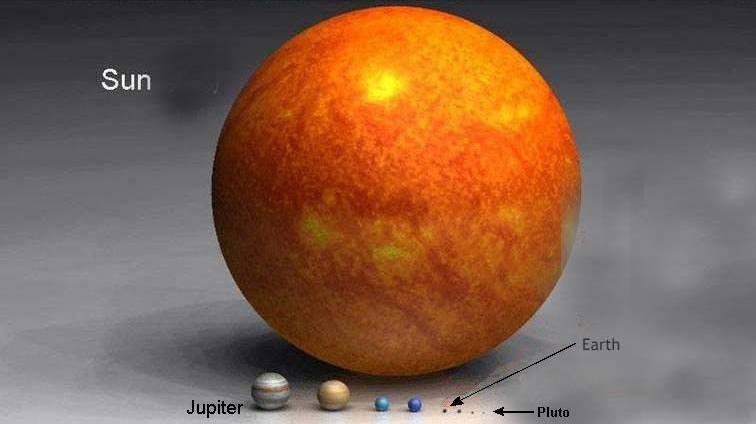
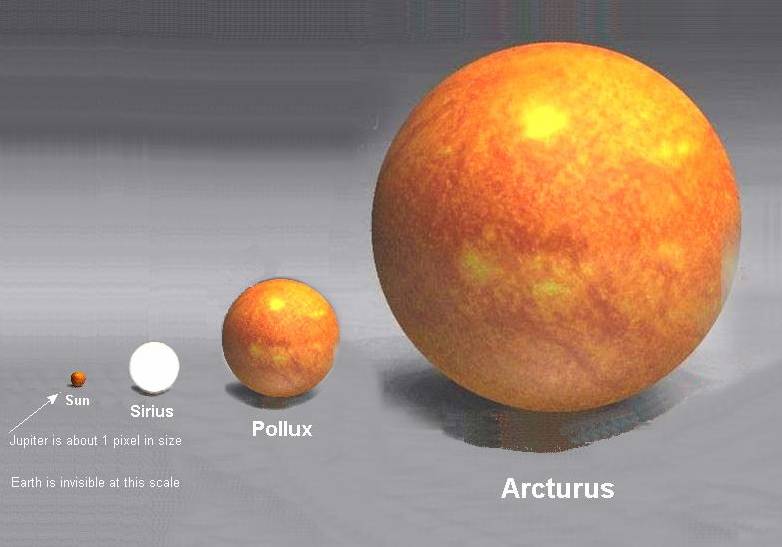
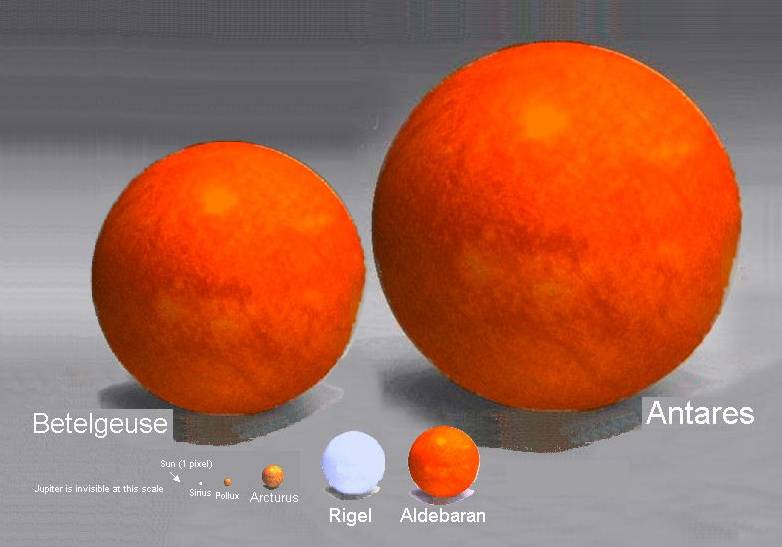
    If you think Earth is really significant, take a look at this!


    Imagine how the Universe is ordered. We think we are huge, but then there is a always a bigger sphere. Even Antares must be a speck compared to something else. Likewise there is also always a smaller sphere even smaller than an electron. Amazing how creation works!

    I like the way the author of the blog below has decribed this:


    FOR WHAT IT'S WORTH | Bryce Zabel: Let's Get Small: Plutonian Edition

    Thursday, August 03, 2006

    On writers by Asimov

    A great piece by the master of science fiction Isaac Asimov about what writers go through.

    _______________________

    Isaac Asimov: What Writers Go Through

    (This editorial first appeared in the December 21, 1981, issue of Isaac Asimov's Science Fiction Magazine.)

    Every once in a while I get a letter that strikes a chord. Jeanne S. King of Marietta, Georgia, suggested that I write an editorial on what writers go through. Her tender heart bled for writers and I think she has a point.

    First, let me make it clear what I mean by "writers." I don't want to confine the word only to those who are successful, who have published best-selling books, or who crank out reams of published material every year(if not every day), or who make a lavish living out of their pens, typewriter, or word-processors, or who have gained fame and adulation.

    I also mean those writers who just sell an occasional item, who make only a bit of pin money to eke out incomes earned mainly in other fashions, whose names are not household words, and who are not recognized in the street.

    In fact, let me go farther and say I even mean those writers who never sell anything, who are writers only in the sense that they work doggedly at it, sending out story after story, and living in a hope that is not yet fulfilled.

    We can't dismiss this last classification as "failures" and not "real" writers. For one thing, they are not necessarily failures forever. Almost every writer, before he becomes a success, even a runaway supernova success, goes through an apprentice period when he's a "failure."

    Secondly, even if a writer is destined always to be a failure, and even if he is never going to sell, he remains a human being for whom all the difficulties and frustrations of a writer's life exist and, in fact, exist without the palliation of even an occasional and minor triumph.

    If we go to the other extreme and consider the writer whose every product is an apparently sure sale, we find that the difficulties and frustrations have not disappeared. For one thing, no number of triumphs, no amount of approval, seems to have any carrying power at the crucial moment.

    When even the most successful writer sits down before a blank piece of paper, he is bound to feel that he is starting from scratch and, indeed, that the Damoclean sword of rejection hangs over him. (By the way, when Isay "he" and "him," I mean to ad' "she" and "her" every time.)

    If I may use myself as an example, I always wince a little when anyone, however sincerely and honestly, assumes that I am never rejected. I admit that I am rarely rejected, but between "rarely" and "never" is a vast gulf. Even though I no longer work on spec and write only when a particular item is requested, I still run the risk. The year doesn't pass without at least one failure. It was only a couple of months ago that Esquire ordered a specific article from me. I duly delivered it; and they, just as duly, handed it back.

    That is the possibility all of us live with. We sit there alone, pounding out the words, with our heart pounding in time. Each sentence brings with it a sickening sensation of not being right. Each page keeps us wondering if we are moving in the wrong direction.

    Even if, for some reason, we feel we are getting it right and that the whole thing is singing with operatic clarity, we are going to come back to it the next day and re-read it and hear only a duck's quacking.

    It's torture for every one of us.

    Then comes the matter of re-writing and polishing; of removing obvious flaws (at least, they seem obvious, but are they really?) and replacing them with improvements (or are we just making things worse?). There's simply no way of telling if the story is being made better or is just being pushed deeper into the muck until the time finally comes when we either tear it up as hopeless, or risk the humiliation of rejection by sending it off to an editor.

    Once the story is sent off, no amount of steeling one's self, no amount of telling one's self over and over that it is sure to be rejected, can prevent one from harboring that one wan little spark of hope. Maybe--Maybe--

    The period of waiting is refined torture in itself. Is the editor simply not getting round to it, or has he read it and is he suspended in uncertainty? Is he going to read it again and maybe decide to use it--or has it been lost--or has it been tossed aside to be mailed back at some convenient time and has it been forgotten?

    How long do you wait before you write a query letter? And if you do write a letter, is it subservient enough? Sycophantic enough? Grovelling enough? After all, you don't want to offend him. He might be just on the point of accepting; and if an offensive letter from you comes along, he may snarl and rip your manuscript in two, sending you the halves.

    And when the day comes that the manila envelope appears in the mail, all your mumbling to yourself that it is sure to come will not avail you. The sun will go into eclipse.

    It's been over forty years since I've gone through all this in its full hellishness, but I remember it with undiminished clarity.

    And then even if you make a sale, you have to withstand the editor's suggestions which, at the very least, mean you have to turn back to the manuscript, work again, add or change or subtract material, and perhaps produce a finished product that will be so much worse than what had gone before that you lose the sale you thought you had made. At the worst, the changes requested are so misbegotten from your standpoint that they ruin the whole story in your eyes; and yet you may be in a position where you dare not refuse, so that you must maim your brainchild rather than see it die. (Or ought you to take back the story haughtily and try another editor? And will the first editor then blacklist you?)

    Even after the item is sold and paid for and published, the triumph is rarely unalloyed. The number of miseries that might still take place are countless. A book can be produced in a slipshod manner or it can have a repulsive bookjacket, or blurbs that give away the plot or clearly indicate that the blurb-writer didn't follow the plot.

    A book can be non-promoted, treated with indifference by the publisher and therefore found in no bookstores, and sell no more than a few hundred copies. Even if it begins to sell well, that can be aborted when it is reviewed unsympathetically or even viciously by someone with no particular talent or qualifications in criticism.

    If you sell a story to a magazine you may feel it is incompetently illustrated, or dislike the blurb, or worry about misprints. You are even liable to face the unsympathetic comments of individual readers who will wax merry, sardonic, or contemptuous at your expense--and what are their qualifications for doing so?

    You will bleed as a result. I never met a writer who didn't bleed at the slightest unfavorable comment, and no number of favorable or even ecstatic remarks will serve as a styptic pencil.

    In fact, even total success has its discomforts and inconveniences. Thereare, for instance. . . :
    People who send you books to autograph and return, but don't bother sending postage or return envelopes, reducing you to impounding their books or (if you can't bring yourself to do that) getting envelopes, making the package, expending stamps, and possibly even going to the postoffice.

    People who send you manuscripts to read and criticize (nothing much, just a page-by-page analysis, and if you think it's all right would you get it published with a generous advance, please? Thank you.).

    People who dash off two dozen questions, starting with a simple one like: What in your opinion is the function of science fiction and in what ways does it contribute to the welfare of the world, illustrating your thesis with citations from the classic works of various authors. (Please use additional pages, if necessary.)

    People who send you a form letter, with your name filled in (misspelled), asking for an autographed photograph, and with no envelope or postage supplied.

    Teachers who flog a class of thirty into each sending you a letter telling you how they liked a story of yours, and sending you a sweet letter of her own asking you to send a nice answer to each one of the little dears.

    And so on--

    Well, then, why write?

    A 17th-century German chemist, Johann Joachim Becher, once wrote: "The chemists are a strange class of mortals, impelled by an almost insane impulse to seek their pleasure among smoke and vapor, soot and flame, poisons and poverty; yet among all these evils I seem to live so sweetly, that may I die if I would change places with the Persian King."

    Well, what goes for chemistry, goes for writing. I know all the miseries, but somewhere among them is happiness. I can't easily explain where it is or what it consists of, but it is there. I know the happiness and I experience it, and I will not stop writing while I live--and may I die if I would change places with the President of the United States.

    Taken from:

    Isaac Asimov on writers

    Thursday, May 18, 2006

    Da Vinci Code

    As a Christian Indian myself I fail to understand the fuss about 'The Da Vinci Code' being screened across India. First of all, it is fiction. Secondly, why should people always be afraid of new ideas? If one has so much faith in their own religion, why fear when there are some sort of new questions raised. After all if religion is all about finding the truth, then why should truth be afraid of questions?

    Jesus Christ himself asked people to change the way they thought. He replaced an old ideology in the form of the Old Testament with a New Testament. He was against hypocrisy and judging people. He was against the established religious leadership. He was against imposing his will upon others. Christ was about freedom, not bondage. One must remember that God never imposes His will on anyone. If He did, this would be a sinless world.

    I fail to understand what is so bad about the book and the movie. It is a cleverly weaved action thriller and is super interesting to say the least. India is a free country and the Freedom of Speech and Expression is enshrined in our Constitution under Article 19. So I think it is time that our religious leaders should stop trying to impose their views on the rest of the people. If someone finds the film offensive, don't watch it. But let others watch it! Here it will be logical to quote the French philosopher Voltaire: "I disagree with everything you say, but I will until my death defend your right to say it". Freedom of Speech and Expression goes beyond a legal right. As far as I'm concerned, it's a divine right.

    Friday, May 05, 2006

    Tonga

    The Pacific tsunami warning system needs to be checked thoroughly and improvised. Just a few days ago there was a massive earthquake in the Pacific Ocean next to the island nation of Tonga and despite a warning being issued to New Zealand and Fiji, Tonga - the closest island to the quake which would have seen the maximum devastation in case a tsunami actually formed after the quake did not receive the warning. This needs to be looked into and improvised to help in stopping a catastrophe like the Tsunami of 2004 which took over 200,000 lives.

    Wednesday, May 03, 2006

    Mahajan

    The death of Pramod Mahajan after a 12 day long battle with wounds suffered by bullet wounds is a sad moment in our nation's history. It is also a sad thing that his death comes at the hands of his own younger brother. This act of fraticide will go down in history as one of India's darker moments. Brother has killed brother for unknown reasons and India has suffered the loss of one of its most promising leaders. Our heartfelt prayers and condolences go out to the family of Pramod Mahajan and we pray for peace to the departed soul.

    Monday, May 01, 2006

    Judas

    Judas Iscariot has always been condemned as the traitor who betrayed Jesus Christ. But there are some questions that need to be answered about Judas Iscariot. First of all, isn't that what Jesus was sent to Earth for - to die on the cross. Wasn't Judas just doing his bit in the divine plan? Remember in Matthew 16:21-23 where Peter tries to discourage Jesus from going to Jerusalem and Jesus says unto Peter, "Get thee behind me Satan."

    Why would Jesus call Peter 'Satan' if he really did not want to die? Even in the Garden of Gethsemane when Jesus asks God if he could somehow have "this cup pass over" him, but in the end says "Not my will, but thy will be done" it is obvious that even though Jesus was afraid of dying, it was essential to his mission that he die. So Judas actually played an important part in the mission of Jesus.

    Judas also committed suicide after he accepted the thirty coins of silver. This could only mean that he was deeply distressed by the fact that he was the one who had to identify Jesus to the Jewish temple soldiers. Remember that if Judas betrayed Jesus, Peter denied Jesus - not once but three times that same night!

    While I am not trying to put down Peter in any way. I am simply saying that maybe Judas was not such a creep after all. Maybe he has been demonized wrongly by the church throughout the history of Christendom. Maybe it is time to take a fresh look at the Gospel of Judas and the other Nag Hammadi scrolls. Why should knowledge of any kind be harmful if the so-called "truth" is so infallible? Why should the Gnostics be demonized and ridiculed if the church is so confident that it knows and professes the absolute truth. As a great man called Paramahansa Yogananda once said and said very well -- 'Truth is never afraid of questions.'

    Barbelo

    Barbelo - Wikipedia, the free encyclopedia


    The recently found Gospel of Judas mentions that Jesus is from the immortal realm of Barbelo. I found that Barbelo has also been mentioned in some other Nag Hammadi literature like the Apocryphon of John. The link above is interesting and sheds more light on the immortal realm of Barbelo that Jesus is supposedly a resident of.

    Suryanarayana

    Today's murder of Indian engineer K Suryanarayana by the Taliban is a shameless and cowardly act of violence. It is time for the Indian government to step in and do something about the wretched Taliban. How many more Indian citizens will have to die in Afghanistan? The Indian government needs to be more firm with the Government of Afghanistan and make sure that proper security arrangements are made for Indians working in that nation and helping it develop.

    Saturday, April 29, 2006

    Reservations

    The proposed reservations in IITs and IIMs being done by the Indian HRD ministry is like going back into the days of V.P. Singh and the Mandal commission back in 1990 when I was just in first year college. It is very discouraging to millions of young and qualified students who are not in the reserved category.

    If one recalls watching 'India's Rajiv' by Simi Garewal you will recall the late Prime Minister Rajiv Gandhi calling the Mandalisation of Indian politics as very "unfortunate". It is indeed a shame that the UPA government headed by the Congress party is doing virtually the same thing now as it opposed back in 1990.

    I applaud the Indian science and technology minister Kapil Sibal for being vocal in his opposition to these proposed reservations even if he has broken his party's protocol. Politics in India need vocal leaders and not mute sycophants.